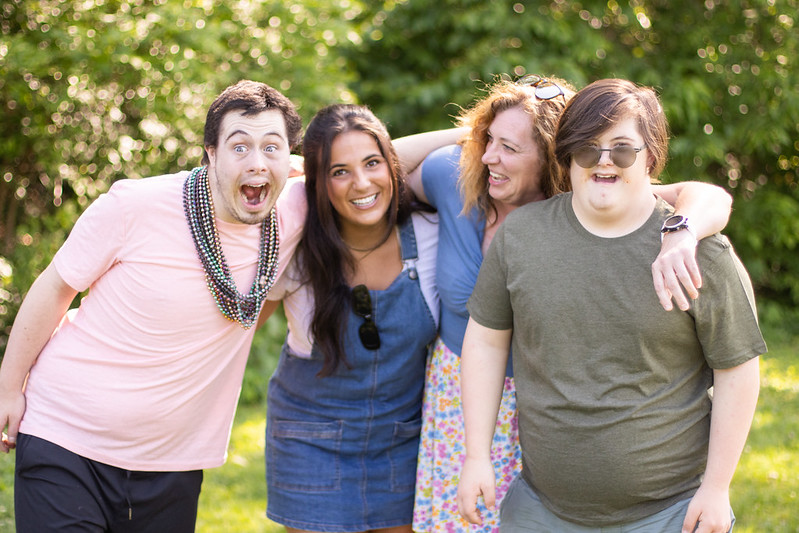
Stock photography lacks disability representation. The photos are often staged and use models without disabilities resulting in misrepresentation and unnatural scenes. Staff from the University of Kentucky Human Development Institute (HDI) wanted to address this problem with the Photo Library Fund for Excellence Project. Their goal was to create accurate and diverse stock photos highlighting disability representation.
Haley Potter, Program Assistant, applied for internal funding for this innovative project to address the needs of people with disabilities. She and her colleagues, Kari Batts, Adam Potter, and Eric Seale worked with approximately 50 self-advocates, family members, and friends who served as models for five photoshoots across four months. All models were paid to participate in a one-hour photoshoot, which resulted in over 1,000 photographs highlighting disability representation.
These photos are available to view, download, share, and use to create and enhance visual and digital products, social media posts, and project websites.
View the HDI photo library at www.flickr.com/people/198826134@N02/. Click photostream to view all photos.
Learn more about the Human Development Institute.
Contact beth.potter@uky.edu with any questions.