
“When people with disabilities started to move out of the institutions and out of their parents back bedrooms, they soon discovered that if they didn’t have dependable, accessible public transportation then there was no difference being forced to stay in the back bedroom or locked away in an institution behind cold stone walls.” – Arthur Campbell, Jr.
Caption: Arthur Campbell, Jr. 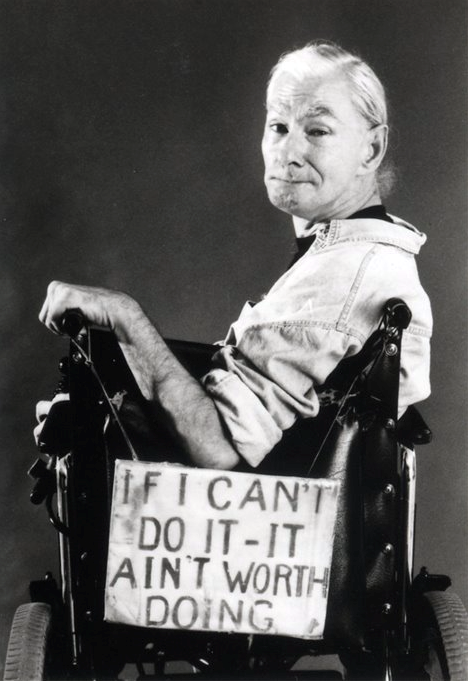
Alt-text: Arthur Campbell, Jr. Seated in his wheelchair looking confidently at the camera. A sign on the back of his chair reads “If I can’t do it, it ain’t worth doing.”
In 1984, Arthur Campbell, Jr. and 3 other individuals decided to address the lack of accessible public transportation in Louisville, Kentucky. Every week for the next year, they met and studied federal, state, and local public transportation laws and regulations. They began to show up at transportation-related meetings and meetings of the Kentucky Legislature.
Between 1985-89 they met with the Transit Authority directors and other officials, trying to negotiate a list of things that would create accessible public transportation and meet the people’s needs.
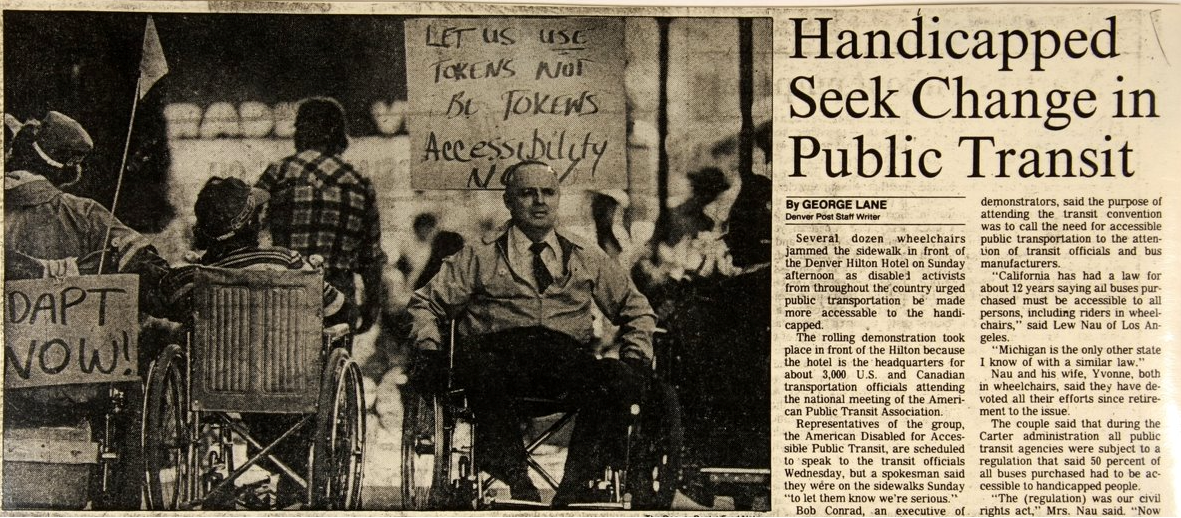
Caption: Newspaper, Handicapped Seek Change in Public Transit
Alt-text: Newspaper showing several people protesting for a change in public transit. One protestor’s sign reads “Let us use token not be tokens. Accessibility now!” Another reads “Adapt Now!”
The negotiations were getting nowhere. The group began to call themselves “Louisville ADAPT,” and talked about taking to the street to demonstrate and protest.
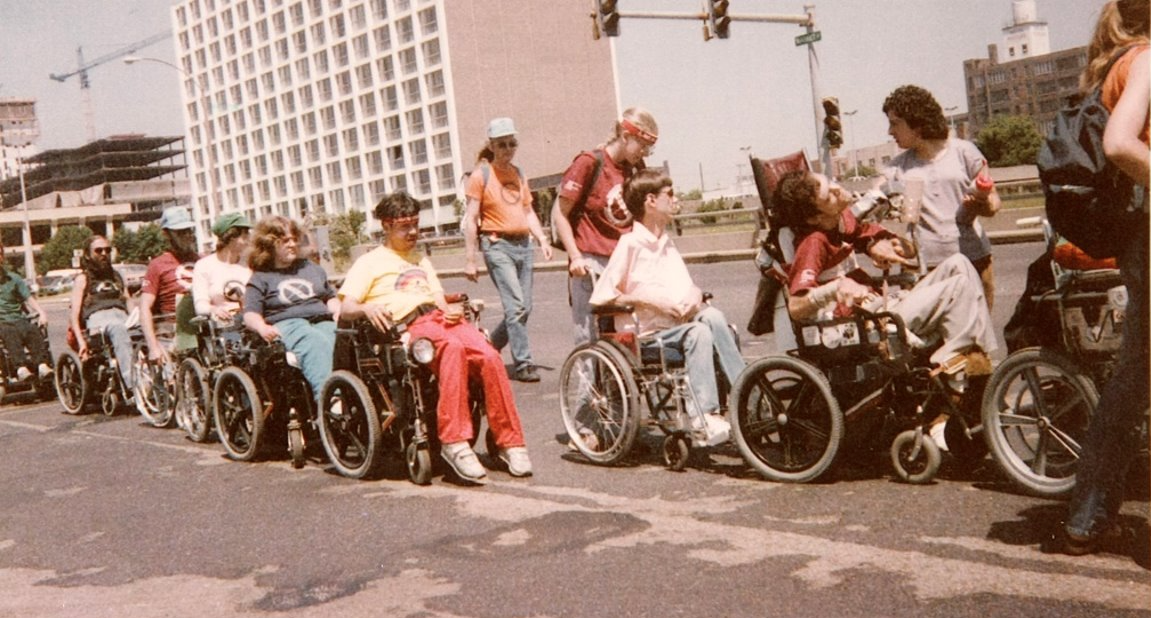
Caption: Louisville’s Public Transit Demonstrations.
Alt-text: several people using wheelchairs moving down the street protesting the lack of transportation in Louisville, Kentucky.
During a protest on May 15, 1988, forty-one protestors using wheelchairs were arrested. The newspaper article titled Disabled Arrested at Omni reads “Police officers pushing Arthur Campbell of Louisville toward a paddy wagon. Forty-one protesters in wheel-chairs were arrested as they demonstrated for equal access to public transportation.”
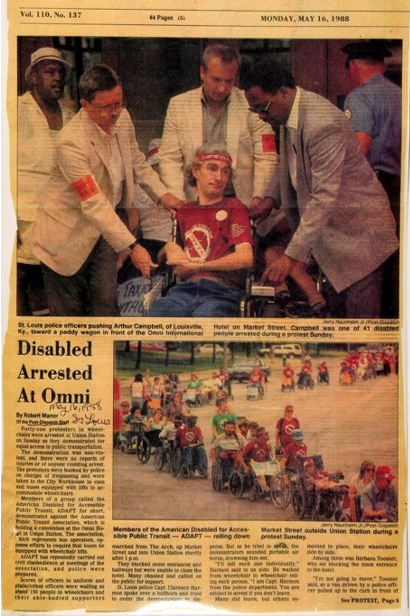
Caption: Newspaper, Disabled Arrested at Omni
Alt-text: Newspaper showing Arthur Campbell, Jr. Being arrested and restrained by three men. Below that, several people using wheelchairs for mobility wear matching red t-shirts rolling to protest the lack of accessible public transportation.
“We were putting so much pressure on the city of Louisville, Jefferson County officials, and TARC, that they finally sat down and seriously negotiated and agreed to meet a list of demands from Louisville ADAPT.” – Arthur Campbell, Jr.
Their efforts led to change! By 1990, 100% of Louisville buses were wheelchair accessible. Louisville became a national model in accessible public transportation. Today, 98.97% of buses in America are accessible. Public Transit is our most affordable, integrated option because of their efforts.
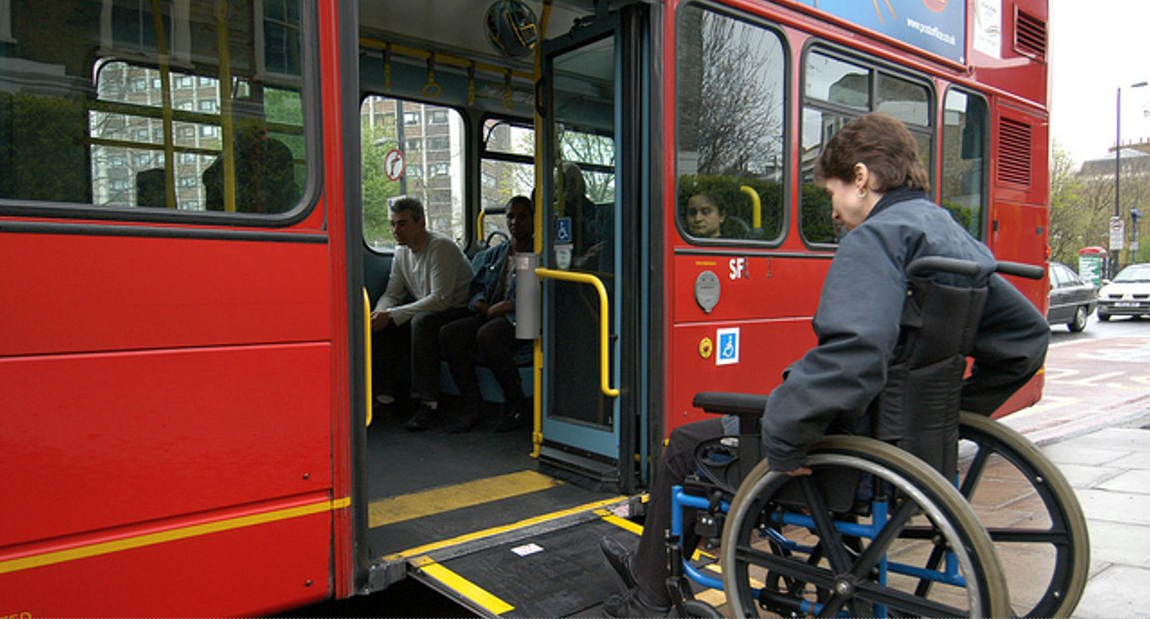
Caption: A person using a wheelchair ramp to board a bus.
Alt-text: A person that uses a wheelchair for mobility is entering a red bus via a wheelchair-accessible ramp.
If you’re interested in learning more about accessible, alternative methods of transportation in Kentucky, visit www.transportation.hdiuky.org.